
Lemongrass
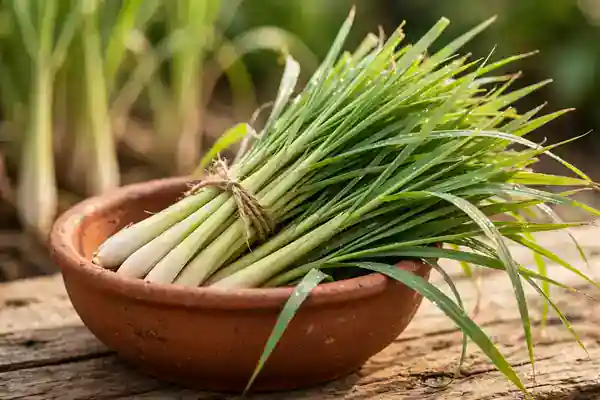
Cymbopogon citratus • English: LemongrassThis aromatic grass is widely used in culinary and herbal infusion traditions. Research has examined its phytochemicals, aroma, cardiovascular effects and other biological activities, while human evidence remains limited and preparation-specific.
Herb Pharmacopoeia Monograph
The Aromatic World of Lemongrass
Lemongrass has a long history as a culinary and household herb across tropical regions, while modern research has investigated its distinctive essential oil and plant extracts.
The leaves are valued for their fresh citrus-like aroma and are commonly used in teas, soups and other culinary preparations. Traditional herbal practices have also used infusions and aromatic preparations.
Modern studies have identified many constituents in Cymbopogon citratus, including citral-rich volatile oils, flavonoids and phenolic compounds. These constituents help explain the plant's continuing scientific interest.
VAIDAI separates traditional use from clinical evidence: laboratory or animal findings should not be presented as proof that an everyday infusion treats a disease.
Why Lemongrass Is Studied
Aroma: its citral-rich volatile fraction gives the plant its characteristic lemon-like fragrance.
Infusion: leaves are commonly prepared as a refreshing herbal beverage.
Research: studies have explored anxiety, blood pressure, antimicrobial activity and phytochemistry.
Evidence: results vary according to preparation, dose, route and study design.
Lemongrass: Traditional Uses & Research Interests
Research has explored several areas, but evidence should be interpreted according to the preparation and quality of the available human studies.
Refreshing Herbal Infusion
Lemongrass leaves are commonly steeped in hot water for a bright, citrus-like herbal drink.
Culinary and household use is widespread, but traditional use alone does not establish a medical effect.
Aromatic Relaxation Research
Human studies have investigated lemongrass aroma in short-term experimental anxiety settings.
Small trials have reported short-term changes in perceived anxiety, but clinical relevance remains uncertain.
Cardiovascular Research
Reviews have examined possible blood-pressure effects of lemongrass tea and extracts.
Human evidence is limited, so it should not be used as a replacement for blood-pressure treatment.
Antioxidant & Phytochemical Interest
Extracts contain flavonoids, phenolic compounds and volatile constituents that are frequently studied in laboratory research.
Laboratory antioxidant or antimicrobial activity does not automatically translate into clinical benefit in humans.
Lemongrass in Traditional Herbal Practice
Lemongrass is used across culinary and traditional wellness systems, especially as a fragrant leaf infusion and aromatic botanical.
Fresh or dried leaves can be steeped in hot water to make an aromatic beverage. In food traditions, the leaves and stalks are also used to add a lemon-like fragrance and flavor.
Traditional practices may use stronger preparations, but an everyday infusion is not equivalent to a concentrated extract or essential oil.
The botanical identity matters because different Cymbopogon species can differ in chemistry and traditional use. Quality, plant part and preparation should therefore be checked.
How Lemongrass Fits a Daily Routine
Infusion: use dried or fresh leaves according to the product's preparation directions.
Culinary: the aromatic stalks and leaves can be used in food and beverages.
Aroma: essential oil is concentrated and should not be treated like a tea.
Medical care: concentrated products should not replace prescribed treatment.
Lemongrass Botanical Chemistry
The plant contains volatile oils and non-volatile compounds that vary with cultivar, geography, plant part and extraction method.
Citral
Aromatic Aldehyde Mixture
Citral, mainly a mixture of geranial and neral, is a major contributor to the characteristic lemon-like aroma of lemongrass essential oil.
Geraniol & Myrcene
Volatile Terpenes
These aromatic compounds occur in the volatile fraction and contribute to the plant's fragrance and ongoing laboratory research interest.
Flavonoids & Phenolics
Plant Polyphenols
Non-volatile extracts can contain flavonoids and phenolic compounds whose levels depend strongly on extraction and processing.
What Research Says About Lemongrass
Human studies provide useful context, but they are relatively small and often examine specific preparations rather than ordinary household use.
| Research area | What was studied | Interpretation |
|---|---|---|
| Aroma & anxiety | A 2015 controlled human study examined brief inhalation of lemongrass aroma during an experimental anxiety task. | Short-term reductions in perceived anxiety were reported; larger clinical studies are needed. |
| Dental anxiety | A 2025 randomized clinical trial evaluated lemongrass aromatherapy during periodontal treatment. | Anxiety and some hemodynamic measures improved, but the study was small and context-specific. |
| Blood pressure | A review assessed preclinical and clinical evidence for possible antihypertensive effects. | Potential activity is scientifically interesting, but evidence remains insufficient for treatment claims. |
| Human safety | An older controlled study assessed a lemongrass leaf tea in healthy volunteers over a short period. | No major laboratory abnormalities were reported, but this does not establish long-term safety for concentrated products. |
Lemongrass Preparations & Responsible Use
How the plant is prepared matters. A food or leaf infusion is different from a concentrated extract or essential oil.
Prepare according to the product's directions. A simple infusion is the traditional household form and is much less concentrated than essential oil.
Fresh stalks and leaves are widely used for aroma and flavor in foods and drinks. Culinary use should be distinguished from concentrated supplementation.
Essential oil is a concentrated preparation intended for specific uses. Follow a suitable product's route and dilution instructions and avoid casual internal use.
Lemongrass Safety & Precautions
- Do not assume essential oil has the same safety profile as a culinary herb or mild infusion.
- Concentrated products can have stronger biological effects and should be used according to product-specific directions.
- Pregnancy and breastfeeding safety for concentrated preparations is not well established; professional advice is appropriate.
- If you take medicines for blood pressure, blood sugar or other chronic conditions, discuss concentrated herbal products with a qualified healthcare professional.
- Stop use and seek appropriate advice if an unusual reaction occurs.
- This botanical is not a substitute for prescribed treatment, diagnosis or medical monitoring.
Frequently Asked Questions
Clear answers about Cymbopogon citratus, traditional use, research and safety.
Lemongrass is an aromatic perennial grass commonly identified as Cymbopogon citratus and widely used in food, beverages and herbal preparations.
The botanical name covered on this page is Cymbopogon citratus (DC.) Stapf, a member of the Poaceae family.
The leaves and stalks are traditionally used in culinary preparations and as an aromatic herbal infusion in many tropical and Southeast Asian traditions.
Small human studies of lemongrass aroma have reported short-term reductions in experimental anxiety, but more research is needed to determine clinical relevance.
Research has explored possible blood-pressure effects, but the evidence is not strong enough to use Lemongrass as a treatment for hypertension.
Its chemistry includes citral, geraniol, myrcene and other volatile compounds, along with flavonoids and phenolic constituents.
No. A leaf infusion contains a different and generally less concentrated mixture than essential oil. They should not be treated as interchangeable preparations.
Short-term human research on leaf infusion has not identified major safety signals, but long-term safety and concentrated-product safety are less well established.
No. Lemongrass should not replace prescribed medicines, professional diagnosis, medical monitoring or evidence-based treatment.
Check the botanical identity, plant part, preparation type, serving information, quality testing and manufacturer details, especially for extracts and essential oils.



Academic & Scientific References
- 1. PubMed: Ethnopharmacology, chemical composition and functions of Cymbopogon citratus.
- 2. PubMed: Effect of Lemongrass Aroma on Experimental Anxiety in Humans.
- 3. PubMed: 2025 randomized clinical trial of Lemongrass aromatherapy and dental anxiety.
- 4. PubMed: Review of the antihypertensive potential of Lemongrass.
- 5. PubMed: Human assessment of Lemongrass tea safety and possible hypnotic/anxiolytic effects.
Disclaimer: This information is intended strictly for educational and informational purposes only and is not a substitute for professional medical advice, diagnosis, or treatment. Consult a qualified healthcare provider before using concentrated herbal supplements, particularly if you are pregnant, nursing, taking medication, or have a pre-existing medical condition.