
Gudhal
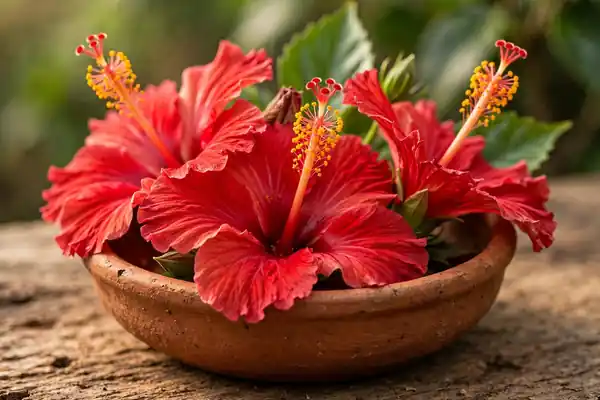
Hibiscus rosa-sinensis • English: China Rose / HibiscusGudhal is a familiar flowering plant in India with a long history in traditional household and herbal practices. Modern research on Hibiscus rosa-sinensis has explored its phytochemicals, antioxidant activity, antimicrobial potential and selected topical applications. Human clinical evidence remains limited and should not be confused with research on Roselle (Hibiscus sabdariffa).
Herb Pharmacopoeia Monograph
The Vibrant World of Gudhal
Gudhal (Hibiscus rosa-sinensis) is a tropical flowering shrub widely cultivated across India and other warm regions. Its flowers and leaves have a long history in household and traditional practices. VAIDAI distinguishes traditional use from evidence generated by laboratory, animal and human studies.
Gudhal: Traditional Wellness & Research Interests
Gudhal is valued for its ornamental beauty and traditional botanical uses, while modern research is investigating specific extracts and plant parts.
Traditional Flower Use
Gudhal flowers have been used in South Asian traditional practices and household preparations.
Historical use is important cultural context but does not by itself establish a medical treatment.
Antioxidant Research
Flower extracts contain phenolic and flavonoid compounds and have shown antioxidant activity in laboratory studies.
Laboratory antioxidant assays do not directly prove clinical benefits in people.
Antimicrobial Interest
Studies of H. rosa-sinensis flower extracts have reported antimicrobial activity against selected microorganisms in vitro.
Extract activity in a laboratory setting should not be interpreted as a substitute for antibiotics or medical care.
Topical Research
A small clinical pilot study examined a 4% leaf extract ointment as an adjunct to compression therapy for venous leg ulcers.
The study was small and adjunctive; stronger controlled trials are needed before broad therapeutic conclusions.
Gudhal in Traditional Herbal Practice
Gudhal has a familiar place in Indian household and traditional botanical culture, especially as a flowering plant used in personal-care and herbal preparations.
Traditional practices have used flowers, leaves and other plant parts in different preparations. Because chemical composition varies with plant part, extraction method and cultivar, evidence from one preparation should not automatically be applied to another.
Gudhal has also attracted research interest for antioxidant, antimicrobial, anti-inflammatory and other biological activities, with much of the evidence coming from laboratory or animal studies.
VAIDAI separates traditional heritage from clinical evidence. Gudhal should be viewed as a botanical of research interest rather than as a proven treatment for disease.
How Gudhal Fits a Responsible Wellness Routine
Traditional: appreciate Gudhal as an important flowering botanical in Indian culture.
Preparation: identify the plant part and extraction method before using a concentrated product.
Quality: choose correctly identified, clean and appropriately processed botanical material.
Medical care: do not use Gudhal preparations as a replacement for prescribed treatment.
Gudhal's Botanical Chemistry
Hibiscus rosa-sinensis contains a diverse phytochemical profile that varies by flower colour, plant part and extraction method.
Anthocyanins
Flower Pigments
Anthocyanins contribute to the red and other deep flower colours and are among the pigments studied for antioxidant activity.
Flavonoids
Polyphenolic Constituents
Flavonoids including quercetin- and kaempferol-related compounds have been reported in different plant parts.
Tannins & Phenolics
Research-Studied Compounds
Tannins and other phenolic compounds contribute to the broader phytochemical profile and have been investigated in antioxidant and antimicrobial assays.
Common Gudhal Preparations
Gudhal preparations differ substantially in plant part, concentration and route of use.
Flowers may be used in traditional infusions. Use only appropriately identified botanical material intended for food or infusion use.
Traditional systems have used flower-based preparations in different ways. Evidence and safety depend on the exact preparation.
A small clinical study investigated a 4% leaf extract ointment alongside compression stockings for venous leg ulcers; this is not a general self-care recommendation.
Concentrated extracts are not equivalent to ordinary food or traditional infusions. Follow product directions and seek professional guidance when appropriate.
Safety & Responsible Use
Gudhal is not a single standardized product. Safety depends on the plant part, preparation, concentration, route and individual circumstances.
- Food vs extract: an ordinary infusion is not equivalent to a concentrated extract.
- Pregnancy & breastfeeding: reliable human safety data for medicinal-dose Gudhal preparations are limited; seek professional advice before concentrated use.
- Medicines: discuss concentrated herbal preparations with a clinician if you take prescription medicines or manage a chronic condition.
- Allergy: discontinue use if a topical or oral preparation causes rash, irritation or other concerning symptoms.
- Children: avoid concentrated medicinal preparations unless specifically advised by a qualified professional.
- Medical treatment: Gudhal should not replace prescribed treatment or professional medical care.
Frequently Asked Questions
Clear answers about Gudhal, Hibiscus rosa-sinensis, traditional use, research and safety.
Gudhal commonly refers in India to Hibiscus rosa-sinensis, a tropical flowering shrub in the Malvaceae family.
The botanical name is Hibiscus rosa-sinensis L.
No. Gudhal usually refers to Hibiscus rosa-sinensis, while Roselle or sour hibiscus is Hibiscus sabdariffa. Their research evidence should not be treated as interchangeable.
Flowers and leaves are commonly discussed in traditional use, while roots and other parts have also been studied. Plant parts are chemically different.
Research on Hibiscus rosa-sinensis has explored antioxidant, antimicrobial and other biological activities, but human clinical evidence remains limited.
Evidence for blood-pressure effects is much stronger for Hibiscus sabdariffa than for Hibiscus rosa-sinensis. Results from Roselle studies should not be directly attributed to Gudhal.
Reported compounds include anthocyanins, flavonoids, tannins, phenolics, saponins and other secondary metabolites, with composition varying by plant part and flower colour.
No. Gudhal preparations should not replace prescribed medicines, diagnosis, monitoring or professional medical care.
Reliable human safety evidence for medicinal-dose Gudhal preparations is limited. Pregnancy or breastfeeding should be discussed with a qualified healthcare professional before concentrated use.
Check the botanical name, plant part, processing method, intended route of use, ingredient list, quality testing and manufacturer information.


Academic & Scientific References
Selected PubMed-indexed research relevant to Hibiscus rosa-sinensis and its evidence context.
- PubMed: Comprehensive overview of Hibiscus rosa-sinensis — ethnobotany, phytochemistry, pharmacology and toxicology.
- PubMed: 2025 review of Hibiscus rosa-sinensis covering phytochemistry, nutrition and molecular research.
- PubMed: Identification and isolation of antimicrobial compounds from Hibiscus rosa-sinensis flower extract.
- PubMed: Antioxidant and antibacterial activities of Hibiscus rosa-sinensis flower extracts.
- PubMed: Pilot study of 4% Hibiscus rosa-sinensis leaf extract ointment as an adjunct for venous leg ulcers.
Disclaimer: This information is intended strictly for educational and informational purposes only and is not a substitute for professional medical advice, diagnosis, or treatment. Consult a qualified healthcare provider before using concentrated herbal supplements, particularly during pregnancy, breastfeeding, childhood, or when taking medication.