
Jamun
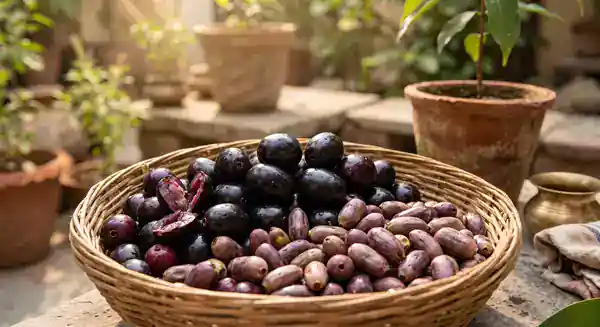
Syzygium cumini • English: Java Plum / Black PlumJamun is a dark purple fruit with a long history in Indian food and traditional herbal practice. Modern research has investigated Syzygium cumini, especially its fruit, seeds and leaves, in relation to glucose metabolism and other biological activities. Human evidence remains limited and varies by plant part, preparation and study design.
Herb Pharmacopoeia Monograph
The Deep Purple World of Jamun
Jamun (Syzygium cumini) is a fruit-bearing tree widely known across South Asia. The ripe fruit is eaten fresh, while seeds, leaves and bark have also appeared in traditional herbal practices.
VAIDAI presents Jamun with a clear distinction between a nutritious food, traditional uses and research on concentrated preparations. Although glucose-related effects are frequently discussed, current clinical evidence does not justify presenting Jamun as a replacement for diabetes treatment.
Potential Wellness Associations
Jamun is best understood as a nutrient-rich fruit with a long traditional history and an evolving research profile.
Fruit-Based Nutrition
Fresh ripe Jamun contributes water, fibre and naturally occurring plant compounds as part of a varied diet.
The fruit has long been eaten seasonally and used in drinks, preserves and other food preparations.
Food-level use should not be equated with the effects of concentrated seed or leaf extracts.
Glucose Research
Syzygium cumini has been investigated for effects on blood-glucose-related measures, particularly in seed and leaf preparations.
A small randomized trial of Jamun leaf tea did not show a significant fasting-glucose benefit over 28 days.
A 2026 systematic review found a modest fasting-glucose signal across Myrtaceae interventions but rated certainty low to very low because of substantial heterogeneity.
Polyphenol-Rich Profile
Research reviews describe anthocyanins, ellagic acid and flavonoids among the phytochemicals found in different parts of the plant.
Extracts and isolated compounds have shown antioxidant and enzyme-related activities in laboratory models.
Laboratory findings are useful for understanding mechanisms but do not establish clinical benefits in people.
Jamun in Traditional Herbal Practice
Jamun has a long-standing place in South Asian food culture and traditional herbal practice.
Traditional systems have used different parts of the Jamun tree, including fruit, seeds, leaves and bark, for a range of purposes. These historical uses are not equivalent to modern clinical proof.
Seed preparations are particularly prominent in traditional discussions of glucose balance. However, the composition of a seed powder, aqueous preparation or standardized extract can differ substantially.
For VAIDAI, the most responsible framing is to celebrate Jamun as a food and botanical of traditional interest while keeping therapeutic claims proportional to the evidence.
How Jamun Fits a Wellness Routine
Food: enjoy ripe fruit as part of a varied diet.
Traditional preparation: seed powder and leaf preparations have historical use, but concentrated forms deserve more caution.
Quality: botanical identity, plant part and processing method matter.
Metabolic care: Jamun products should not replace prescribed diabetes medicines or monitoring.
Jamun's Botanical Chemistry
The plant contains a diverse mixture of pigments, polyphenols and other phytochemicals.
Anthocyanins
Purple Fruit Pigments
Anthocyanin pigments contribute to the deep colour of ripe Jamun fruit and are among the phytochemicals described in research reviews.
Ellagic Acid & Flavonoids
Polyphenolic Constituents
Ellagic acid and flavonoids such as kaempferol and myricetin have been reported among compounds associated with different plant parts.
Seed Constituents
Preparation-Dependent Profile
Seed extracts contain multiple compounds and their activity depends on extraction method, concentration and botanical material.
Scientific Research Snapshot
A concise evidence map based on peer-reviewed literature and human studies.
| Research Area | Preparation / Context | What the Literature Suggests | Evidence Status |
|---|---|---|---|
| Dysglycemia | Syzygium / Myrtaceae interventions | A 2026 meta-analysis of 13 trials found a modest reduction in fasting glucose, but not consistent effects on post-meal glucose or HbA1c; heterogeneity was very high. | Promising but Low-Certainty |
| Leaf Tea | Randomized clinical trial | In a small 28-day trial, Jamun leaf tea did not significantly reduce fasting glucose compared with placebo tea. | Negative / Limited |
| Phytochemistry | Fruit, seeds, leaves & bark | Reviews report anthocyanins, ellagic acid and several flavonoids and related compounds. | Well Characterized |
| Laboratory Activity | Seed and fruit extracts | Experimental studies report enzyme inhibition and other biological activities, but these findings do not establish clinical efficacy. | Preclinical |
| Safety | Extracts / experimental models | Animal studies have not identified major toxicity at tested doses, but long-term human safety data for concentrated preparations remain limited. | Limited Human Data |
Key research links: 2026 systematic review & meta-analysis · randomized leaf-tea trial · phytochemistry & traditional-use review · human hyperglycemia study · toxicity assessment
Ways Jamun Is Commonly Prepared
Preparation and plant part can materially change the composition and evidence profile.
Enjoy ripe fruit as a seasonal food. Normal food use is different from concentrated herbal supplementation.
Jamun seed powder appears in traditional practices. Use only a reputable food-grade product and follow its label rather than assuming a medicinal dose.
Leaf tea has been studied clinically, but evidence has not established a reliable glucose-lowering effect. Do not use it as a substitute for treatment.
Extracts are more concentrated than food. Follow product directions and seek professional advice if used regularly or alongside medicines.
Safety & Responsible Use
Jamun fruit is a food, but concentrated seed, leaf or extract products require more caution. Evidence for long-term safety and standardized dosing remains limited.
- Diabetes Medicines: If using seed or leaf supplements while taking glucose-lowering medicines, discuss them with a qualified healthcare professional because additive glucose-lowering effects are possible.
- Food vs Extract: Eating the fruit is not equivalent to taking a concentrated seed or leaf extract.
- Pregnancy & Breastfeeding: Evidence for medicinal-dose Jamun preparations is limited. Prefer professional guidance before concentrated use.
- Children: Avoid giving concentrated herbal preparations to children unless advised by a qualified professional.
- GI Tolerance: Traditional or concentrated preparations may cause digestive discomfort in some people, especially at higher amounts.
- Product Quality: Look for clear botanical identity, plant part, processing information and reputable sourcing.
- Medical Treatment: Jamun should not replace prescribed diabetes medicines, glucose monitoring or medical care.
Frequently Asked Questions
Clear answers about Jamun, Syzygium cumini, traditional use, research and safety.
Jamun is the common Indian name for the fruit of Syzygium cumini, also known as Java plum or black plum.
The botanical name is Syzygium cumini (L.) Skeels, a member of the Myrtaceae family.
Traditional practices have used the fruit, seeds, leaves and bark. These parts differ chemically and should not be treated as interchangeable.
Jamun has been studied for glucose-related effects, but human evidence is inconsistent. A recent meta-analysis found a modest fasting-glucose signal across several Myrtaceae interventions, with low certainty and substantial heterogeneity.
A small randomized trial found that Jamun leaf tea did not significantly change fasting glucose over 28 days compared with placebo tea.
Research reviews describe anthocyanins, ellagic acid and flavonoids among the plant's phytochemicals, with composition varying by plant part and preparation.
No. Jamun products should not replace prescribed medicines, glucose monitoring or medical advice.
Ripe Jamun is commonly eaten as a fruit. Concentrated seed, leaf and extract products have different exposure levels and should be approached more cautiously.
Jamun has a long history in Indian traditional medicine and food culture. VAIDAI distinguishes historical traditional use from modern clinical evidence.
Check the botanical name, plant part, extraction or processing method, serving information, quality testing and manufacturer details.

Academic & Scientific References
- 1. PubMed: Efficacy and Safety of Syzygium cumini and Related Myrtaceae Interventions for Dysglycemia — 2026 systematic review and meta-analysis.
- 2. PubMed: Randomized clinical trial of Syzygium cumini leaf tea in type 2 diabetes.
- 3. PubMed: Review of Syzygium cumini phytochemical constituents and traditional uses.
- 4. PubMed: Syzygium cumini and glucose-related measures in hyperglycemic subjects.
- 5. PubMed: Syzygium cumini extracts — biological activity and acute/subacute toxicity assessment.
- 6. VAIDAI Herb Library. Educational botanical interpretation based on traditional use and modern research literature.
Disclaimer: This information is intended strictly for educational and informational purposes only and is not a substitute for professional medical advice, diagnosis, or treatment. Consult a qualified healthcare provider before using concentrated herbal supplements, particularly if you are pregnant, nursing, taking medication, managing diabetes, or have a pre-existing medical condition.