
Methi Herb (Fenugreek)
Trigonella foenum-graecum L. • Sanskrit: MethikaMethi, commonly known as Fenugreek, is a traditional culinary and Ayurvedic herb valued for its aromatic seeds, distinctive taste and long history of use in food and wellness preparations.
Herb Pharmacopoeia Profile
The Aromatic Seed of Traditional Wellness
Methi (Trigonella foenum-graecum) occupies an important place in South Asian culinary traditions. Its seeds are valued for their distinctive aroma, slightly bitter flavour and naturally occurring plant compounds.
Beyond the kitchen, Fenugreek has a long history of traditional use in herbal and Ayurvedic preparations. Modern research has investigated Fenugreek seeds in several areas, particularly metabolic and glycemic parameters, although evidence varies between preparations and studies.
What Is Methi Herb?
Methi herb is the common Indian name for Fenugreek, botanically known as Trigonella foenum-graecum.
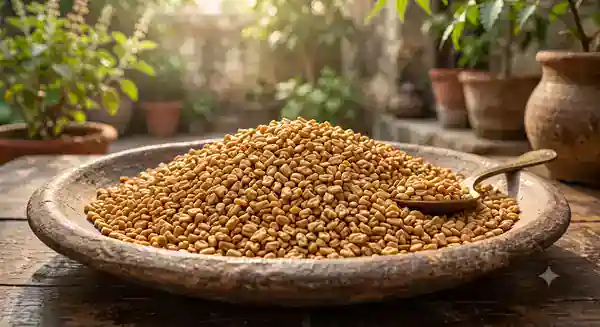
Methi Seeds
Methi seeds are the small, aromatic seeds of the Fenugreek plant. They are commonly used as a culinary spice and are also found in traditional food-based preparations and infusions.
Fresh Methi Leaves
Fresh Fenugreek leaves are widely used in Indian cooking. They are valued as a leafy culinary herb and are distinct from the concentrated use of seeds or extracts.
Kasuri Methi
Kasuri Methi refers to dried Fenugreek leaves commonly used as an aromatic culinary ingredient. It should not be confused with Methi seed powder.
Methi Powder
Methi powder is ground Fenugreek seed. Its use depends on the recipe, food preparation or specific product formulation.
In traditional Indian food and herbal practice, the word Methi can therefore refer to the plant, its leaves or its seeds depending on context. Concentrated extracts are different from ordinary culinary use.
Holistic Methi Benefits
Exploring the traditional uses and research areas associated with Fenugreek.
Digestive Wellness
Methi has traditionally been included in food and herbal preparations associated with comfortable digestion.
Fenugreek seeds have a long history of culinary and traditional digestive use.
Fenugreek contains dietary fibre and several phytochemicals being investigated for gastrointestinal and metabolic effects.
Metabolic Wellness
Fenugreek is traditionally associated with metabolic wellness and has been studied in relation to glycemic parameters.
Clinical studies have investigated fasting glucose, post-meal glucose, HbA1c and insulin-related parameters.
Results are promising in some analyses, but study preparations and outcomes vary.
Fibre & Satiety
Fenugreek seeds naturally contain dietary fibre and mucilaginous components, making them nutritionally distinctive.
The seed contains soluble and insoluble fibre fractions along with proteins and plant compounds.
Fibre-rich foods can contribute to normal digestive function and overall dietary quality.
Antioxidant Potential
Fenugreek contains naturally occurring polyphenols and other phytochemicals investigated for antioxidant activity.
Phenolic compounds, flavonoids and steroidal saponins contribute to the seed's complex phytochemical profile.
Antioxidant activity has been explored in experimental and nutritional research.
Traditional Vitality Support
Methi has traditionally been included in nourishing food-based preparations and household wellness practices.
Its seeds and leaves have been valued as both food and traditional botanical material.
Nutritional composition and phytochemical diversity make Fenugreek a subject of ongoing research.
Culinary Wellness
One of Methi's most important strengths is its natural place in everyday food, from whole seeds to fresh leaves.
Commonly used as a spice in dals, vegetables, pickles and spice blends.
Fresh Methi and dried Kasuri Methi are widely used in Indian cuisine.
Ayurvedic Wisdom & Energetics
Methi, traditionally identified as Methika, has a long history within Indian food and herbal traditions. Its seeds have been valued in traditional preparations connected with digestion, nourishment and metabolic wellness.
From an Ayurvedic perspective, traditional herbal use is interpreted through qualities, taste, potency and individual constitution. Such traditional descriptions should be distinguished from modern clinical evidence.
— Traditional Indian herbal practice
Methi & Ayurvedic Wellness
Digestive Tradition
Traditionally incorporated into food and herbal preparations associated with digestive comfort.
Metabolic Tradition
Traditionally associated with metabolic balance and nourishing food-based practices.
Culinary Integration
Methi is naturally incorporated into everyday meals, allowing its traditional use to remain closely connected with food.
Traditional Preparations
Methi seed preparations, culinary spice blends, traditional infusions and food-based formulations.
Bioactive Chemistry
The naturally occurring components that make Fenugreek an important botanical of research interest.
Dietary Fibre
A Major Nutritional Component
Fenugreek seeds contain substantial dietary fibre, including soluble and mucilaginous fractions that contribute to the seed's distinctive texture and nutritional profile.
Steroidal Saponins
Characteristic Phytochemicals
Fenugreek contains steroidal saponins and related compounds that have been investigated extensively in phytochemical and experimental research.
4-Hydroxyisoleucine
Naturally Occurring Amino Acid Derivative
4-Hydroxyisoleucine is one of the distinctive compounds associated with Fenugreek seeds and has been investigated in metabolic research.
Polyphenols & Flavonoids
Antioxidant-Related Compounds
Fenugreek contains a diverse range of phenolic and flavonoid compounds contributing to its overall phytochemical profile.
Modern Scientific Research
A concise view of major research areas investigated for Fenugreek.
| Research Area | Investigated Parameter | Research Summary | Evidence |
|---|---|---|---|
| Glycemic Parameters | Fasting glucose, post-meal glucose, HbA1c | A 2025 systematic review and meta-analysis of 26 randomized controlled trials reported improvements in several glycemic parameters, while noting the need for higher-quality research. | Moderate |
| Metabolic Health | Glucose & insulin-related markers | Clinical research has investigated Fenugreek in relation to glucose regulation and insulin-related outcomes. | Moderate |
| Lipid Parameters | Cholesterol & triglycerides | Some systematic reviews report improvements in selected lipid parameters, although study heterogeneity remains important. | Emerging–Moderate |
| Safety | Adverse effects & tolerability | Recent human evidence suggests most reported adverse effects are mild and commonly gastrointestinal, while allergic reactions and medication interactions have also been reported. | Human Safety Evidence |
Research findings should not be interpreted as proof that Methi or Fenugreek can diagnose, treat or cure disease.
Dosage & Traditional Preparations
Practical ways Methi is traditionally incorporated into food and wellness routines.
Whole Methi seeds can be used as a culinary spice in dals, vegetables, pickles, curries and traditional spice blends.
Ground Methi seed may be incorporated into food or traditional preparations. Quantity should depend on the recipe or product formulation.
Methi seeds may be incorporated into a warm infusion. The strength and frequency should be appropriate to the preparation and individual tolerance.
Concentrated extracts and supplements are different from culinary Methi. Follow the manufacturer's serving instructions and professional guidance when required.
Important: There is no single universal medicinal dosage appropriate for everyone. Concentrated Fenugreek products should be used according to their formulation and professional guidance.
Safety Considerations & Precautions
Methi is widely consumed as a food spice, but concentrated seeds, extracts and supplements require greater attention to individual health circumstances.
- Blood Glucose: Fenugreek may influence blood-glucose parameters. People taking glucose-lowering medicines should discuss concentrated use with a healthcare professional.
- Gastrointestinal Sensitivity: Mild gastrointestinal discomfort is among the adverse effects reported in human studies.
- Allergies: Allergic reactions to Fenugreek have been reported. Extra caution is appropriate for people with relevant food or legume allergies.
- Pregnancy: Culinary use and concentrated medicinal preparations are not equivalent. Consult a qualified healthcare professional before using concentrated preparations during pregnancy.
- Medication Interactions: Fenugreek may interact with certain medicines. Professional advice is appropriate when using concentrated supplements alongside prescription medication.
- Concentrated Extracts: Extracts and supplements should not be treated as equivalent to ordinary culinary consumption.
Frequently Asked Questions
Practical answers about Methi, Fenugreek, traditional use, research and safety.
Methi is the common Indian name for Fenugreek, botanically known as Trigonella foenum-graecum. Its seeds and leaves are widely used in food and traditional wellness preparations.
The botanical name of Methi or Fenugreek is Trigonella foenum-graecum L., a plant belonging to the Fabaceae family.
Traditionally, Methi has been used as a culinary spice and in food-based wellness preparations, particularly those associated with digestive and metabolic wellness.
Methi seeds are commonly used as a spice in Indian cooking and may also be included in traditional infusions and food-based preparations.
Yes. Fenugreek has been studied in randomized clinical trials and systematic reviews, including research examining fasting glucose, post-meal glucose, HbA1c and other metabolic parameters.
Methi is commonly consumed as a food ingredient. Concentrated extracts and supplements are different from normal culinary use and should be used according to product guidance.
Reported adverse effects are generally mild, with gastrointestinal discomfort among the more commonly reported effects. Allergic reactions and possible medication interactions have also been reported.
Culinary use and concentrated medicinal preparations should not be treated as equivalent. Pregnant individuals should consult a qualified healthcare professional before using concentrated Fenugreek supplements or medicinal preparations.
Related Ayurvedic Herbs
Explore other botanicals in the VAIDAI Herb Library.
Academic & Botanical References
-
1.
Chehregosha F, et al.
The effects of fenugreek
(Trigonella foenum-graecum) seed
on glycemic parameters.
Avicenna Journal of Phytomedicine,
2025.
PubMed → -
2.
Amiri Ardekani E, et al.
Exploring the Adverse Effects of
Fenugreek in Humans: A Scoping Review.
Iranian Journal of Medical Sciences,
2026.
PubMed → -
3.
Fenugreek
(Trigonella foenum-graecum):
an evidence-based systematic review.
PubMed → -
4.
Review on ethnobotanical and
traditional uses of Fenugreek.
PubMed → -
5.
Systematic review and meta-analysis
of Fenugreek in type 2 diabetes and
prediabetes.
PubMed → -
6.
Systematic literature review of
Fenugreek seed toxicity.
PubMed →
Disclaimer: This information is intended strictly for educational and general wellness purposes and is not a substitute for professional medical advice, diagnosis or treatment. Traditional Ayurvedic uses should not be interpreted as proof of therapeutic efficacy. Always consult a qualified healthcare provider or certified Ayurvedic practitioner before introducing concentrated herbal supplements, particularly during pregnancy, nursing, medication use or pre-existing medical conditions.