
Tulsi
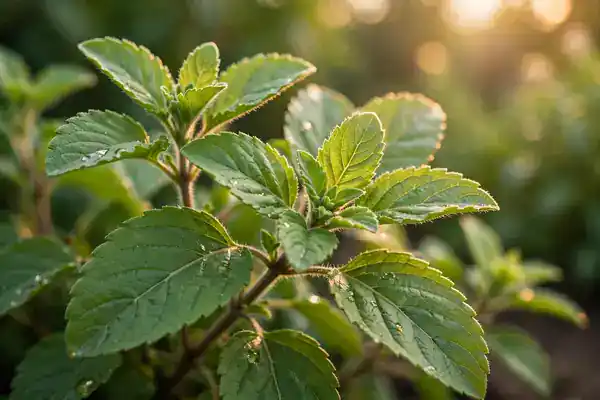
Ocimum tenuiflorum • English: Holy BasilTulsi is an aromatic herb deeply associated with Indian traditional wellness. Modern human research has explored its metabolic, psychological and immune-related effects, while evidence remains dependent on the cultivar, preparation, dose and study quality.
Herb Pharmacopoeia Monograph
The Aromatic World of Tulsi
Tulsi (Ocimum tenuiflorum) is one of the best-known herbs in Indian traditional culture. Its fragrant leaves are commonly used fresh or as an herbal infusion, while extracts have also been investigated in human studies.
VAIDAI distinguishes traditional use from clinical evidence. A systematic review identified human studies across metabolic, cardiovascular, immune and neurocognitive areas, but also noted differences in study quality, dose and preparation.
Tulsi: Traditional Wellness & Research Interests
Modern research is exploring specific preparations of Tulsi rather than proving broad medical claims for the whole plant.
Traditional Herbal Use
Tulsi leaves have long been used in Indian household and Ayurvedic practices, commonly prepared as fresh leaves, teas and other herbal preparations.
Historical use is important cultural evidence but should not be presented as proof of treating a disease.
Stress & Neurocognitive Research
Human studies have explored Tulsi in areas including psychological stress, mood and neurocognitive outcomes.
Results are encouraging in some studies, but larger and better-standardized trials are still needed.
Metabolic Research
Clinical studies have investigated Tulsi in relation to blood glucose and lipid markers.
Tulsi should not replace diabetes medicines, glucose monitoring or medical care.
Phytochemical Interest
Eugenol, rosmarinic acid and aromatic terpenes contribute to the scientific interest surrounding different Tulsi cultivars.
Phytochemical composition can vary with cultivar, growing conditions and extraction method.
Tulsi in Traditional Herbal Practice
Tulsi has a distinctive place in Indian botanical heritage, household wellness and Ayurvedic tradition.
Tulsi has been used traditionally in teas, fresh-leaf preparations and other household herbal practices. Different forms of Tulsi are described in traditional and botanical literature, including Rama and Krishna forms.
Human research has examined several areas including metabolic health, immune-related outcomes and psychological stress. However, studies differ in preparation, dose and methodological quality.
VAIDAI separates traditional heritage from clinical evidence: a traditional use may guide interest in a plant, but it does not automatically establish a medical treatment effect.
How Tulsi Fits a Responsible Wellness Routine
Traditional: enjoy Tulsi as a culturally important aromatic herb and herbal infusion.
Infusion: simple leaf preparations are distinct from concentrated extracts and essential oils.
Quality: check botanical identity, plant part, processing method and manufacturer.
Medical care: concentrated products should not replace prescribed treatment.
Tulsi's Botanical Chemistry
Tulsi contains a complex mixture of aromatic and phenolic compounds whose proportions vary across cultivars and preparations.
Eugenol
Aromatic Phenylpropanoid
Eugenol is a major aromatic compound reported in several the herb varieties and is one of the constituents most frequently discussed in laboratory research.
Rosmarinic Acid
Phenolic Compound
Rosmarinic acid is found in many members of the mint family and contributes to the antioxidant and phytochemical profile of the herb.
Aromatic Terpenes
Volatile Plant Constituents
Compounds such as linalool and other terpenes can contribute to the herb's characteristic aroma and biological research profile.
What Research Says About the herb
Human evidence provides useful context, but it should be interpreted according to study design, dose and preparation.
| Research Area | What Has Been Studied | Evidence Perspective |
|---|---|---|
| Metabolic health | Blood glucose and lipid-related outcomes in human trials | Promising signals, but evidence is not sufficient for disease treatment claims. |
| Psychological stress | Stress, mood and neurocognitive outcomes | Human studies suggest potential benefit, but trials remain relatively small. |
| Immune-related outcomes | Selected immune and infection-related measures | Research interest exists, but clinical relevance varies by preparation and outcome. |
| Safety | Short-term human ingestion studies | A systematic review reported generally favourable short-term safety, while long-term evidence remains limited. |
the herb Preparations & Responsible Use
How the herb is prepared matters. A traditional infusion should not be equated with a concentrated extract or essential oil.
Common Forms
- Fresh leaves: commonly used in household and traditional preparations.
- Herbal infusion: leaves steeped in hot water for a simple botanical beverage.
- Powder: dried plant material with concentration depending on processing.
- Extract: concentrated preparations require more careful attention to dose and quality.
Safety & Quality Notes
- Use products from reputable manufacturers with clear botanical identity and quality information.
- Do not assume that evidence for one the herb extract applies to every tea, powder or essential oil.
- If pregnant, breastfeeding, taking regular medication or managing a chronic condition, discuss concentrated herbal products with a qualified healthcare professional.
- the herb is not a substitute for prescribed treatment or medical monitoring.
Frequently Asked Questions
Clear answers about the herb, Ocimum tenuiflorum, traditional use, research and safety.
the herb, also called holy basil, is an aromatic herb commonly identified as Ocimum tenuiflorum and widely used in Indian traditional practice.
The botanical name commonly used for holy basil is Ocimum tenuiflorum L.; Ocimum sanctum is an older name still found in scientific literature.
Rama and Krishna forms are commonly described within Ocimum tenuiflorum, while Vana tulsi is often associated with Ocimum gratissimum.
the herb has traditionally been used in household herbal preparations, teas and Ayurvedic practices, including contexts related to respiratory comfort, digestion and general wellness.
Human studies have explored psychological stress and neurocognitive outcomes, but evidence remains limited and formulation-specific.
Some human studies have reported metabolic effects, but evidence is not strong enough to replace diabetes treatment or glucose monitoring.
the herb contains phytochemicals such as eugenol, rosmarinic acid and various aromatic terpenes; composition varies by cultivar and preparation.
the herb has a long history of dietary and traditional use, and human literature has reported generally favourable short-term safety. Long-term and concentrated-product evidence is more limited.
No. the herb should not replace prescribed medicines, medical monitoring or professional healthcare advice.
Check the botanical name, cultivar or plant part, extraction method, serving information, quality testing and manufacturer details.
Academic & Scientific References
- 1. PubMed: The Clinical Efficacy and Safety of the herb in Humans — systematic review.
- 2. PubMed: the herb - Ocimum sanctum: A herb for all reasons.
- 3. PubMed: The science behind sacredness of the herb (Ocimum sanctum Linn.).
- 4. PubMed: Anti-candidal Effect of Ocimum sanctum — systematic review of microbial studies.
- 5. PubMed: Harnessing the antibacterial, anti-diabetic and anti-carcinogenic properties of Ocimum sanctum.
Disclaimer: This information is intended strictly for educational and informational purposes only and is not a substitute for professional medical advice, diagnosis, or treatment. Consult a qualified healthcare provider before using concentrated herbal supplements, particularly if you are pregnant, nursing, taking medication, managing diabetes, or have a pre-existing medical condition.