
Sonth
Zingiber officinale • English: SonthSonth is an warming and aromatic rhizome botanical traditionally valued for its distinctive flavour and warming aroma and use in herbal, warming and aromatic, and digestive wellness-oriented wellness practices. Modern research has explored Sonth preparations in several complementary wellness settings.
Herb Pharmacopoeia Monograph
The Fragrant Language of Sonth
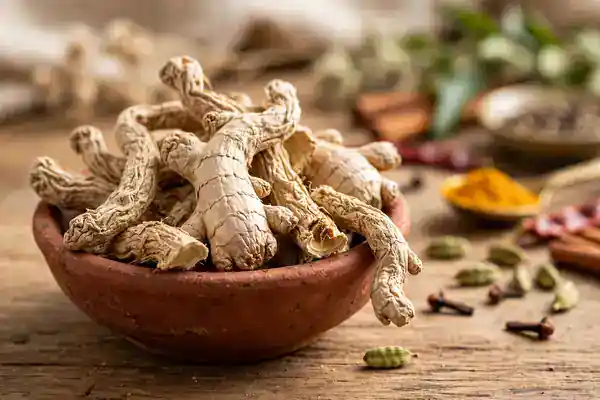
Sonth (Zingiber officinale) is the dried rhizome of ginger, a member of the Zingiberaceae family. It has a long history of culinary and traditional herbal use, especially in warming food and beverage preparations.
VAIDAI presents Sonth with a clear distinction between traditional use, food-level consumption and concentrated supplements. Modern literature has investigated ginger for nausea, vomiting, digestive symptoms, pain and selected metabolic or inflammatory outcomes, with evidence dependent on condition, dose and preparation.
Holistic Health Benefits
Examining Sonth through traditional use, warming and aromatic wellness and modern botanical research.
Relaxation & Calming Aroma
Sonth is traditionally valued for its pleasant flavour and warming aroma and its place in digestive and warming warming and aromatic routines.
Sonth has long been used in warming and aromatic practices designed to create a restful environment.
Clinical and review literature has investigated ginger preparations for nausea, vomiting and selected digestive outcomes.
Digestive Wellness
Sonth's floral aroma makes it a popular botanical for evening rituals and restful self-care routines.
Dried ginger and warm preparations are traditionally associated with digestive and seasonal wellness routines.
Human research is strongest in selected nausea/vomiting contexts; evidence for other outcomes is more variable.
Digestive & Warming Use
Sonth contains pungent phenolic and volatile constituents that contribute to ginger's characteristic flavour and research interest.
Gingerols and shogaols are important ginger constituents; drying changes their relative abundance.
Fresh ginger, dried Sonth, infusions and concentrated extracts differ in chemistry and dose and should not be treated as interchangeable.
Traditional Herbal Use
Sonth can be incorporated into gentle personal wellness rituals through appropriately prepared botanical forms.
Dried ginger has been used in food, spice blends, warm beverages and traditional herbal preparations.
Research continues to examine how Sonth's warming and aromatic constituents interact with human wellbeing.
Traditional Ginger Infusion
Food-grade Sonth may be prepared as a warm infusion and used as part of an ordinary wellness routine.
A Sonth infusion is different from a concentrated ginger extract or supplement.
Use food-grade botanical material intended for infusion and follow the product directions.
Phytochemical Interest
Sonth continues to attract research interest because of its diverse volatile phytochemical profile.
Gingerols, shogaols and volatile constituents contribute to ginger's distinctive chemistry and pungency.
Laboratory and clinical findings should be interpreted according to the specific Sonth preparation studied.
Herbal Wisdom & Warming Profile
Sonth is best understood as an warming and aromatic botanical rather than presented as a classical Ayurvedic medicine without specific textual evidence. Its traditional identity is strongly connected with flavour and warming aroma, herbal preparations and digestive and warming personal rituals.
From a modern botanical perspective, the dried rhizome contains pungent phenolic compounds and volatile constituents. Gingerols are prominent in fresh ginger, while drying can increase related shogaol compounds.
— VAIDAI Botanical Interpretation
How Sonth Fits a Wellness Routine
Warming Culinary Use
Its pungent, warming character is commonly used in cooking and traditional herbal preparations.
Digestive Ritual
Dried ginger and warm preparations are commonly incorporated into digestive and seasonal wellness routines.
Preparation Awareness
Fresh ginger, dried Sonth, powders, decoctions and concentrated extracts differ in chemistry, dose and safety considerations.
Key Principle:
Traditional use, modern research and medical claims should be kept clearly distinct.
Sonth's Bioactive Chemistry
The volatile constituents that contribute to Sonth's characteristic aroma and research interest.
6-Gingerol
Major Pungent Phenolic
6-Gingerol is a major pungent phenolic constituent of fresh ginger and is widely studied for its biological activity.
6-Shogaol
Prominent Drying-Related Compound
6-Shogaol can form from gingerols during drying and heating and contributes to the characteristic pungency of dried ginger.
Volatile Profile
Complex Aromatic Matrix
Sonth contains a broader mixture of volatile constituents whose relative proportions can vary with cultivar, growing conditions and extraction method.
Processing Matters
Fresh vs Dried Ginger
Fresh ginger and dried Sonth are not chemically identical; drying changes gingerol-related compounds, so research findings should be matched to the specific form studied.
Modern Scientific Research
A synthesis of peer-reviewed research examining Sonth preparations and complementary wellness applications.
| Research Area | Investigated Focus | Clinical Observation / Summary | Evidence Level |
|---|---|---|---|
| Nausea & Digestive Symptoms | Oral ginger preparations | Systematic reviews and randomized trials have investigated ginger for nausea and vomiting in several settings, with evidence strongest in selected pregnancy-related and treatment-related contexts. | Systematic Reviews / Trials |
| Inflammation & Metabolic Markers | Aromatic and oral Sonth preparations | Reviews of randomized trials report reductions in some inflammatory and metabolic markers, but results vary by population, dose and study quality. | Mixed Evidence |
| Osteoarthritis & Pain | Ginger consumption | Meta-analyses have investigated ginger for pain and function in osteoarthritis, with some evidence of benefit but uncertainty around effect size and clinical relevance. | Limited / Mixed |
| Safety & Tolerability | Topical and warming and aromatic use | Sonth is generally tolerated by many users, but allergic contact reactions and irritation have been reported, particularly with topical exposure. | Established Safety Consideration |
Preparation & Traditional Uses
Common food and traditional herbal forms; preparation and concentration should follow the product label or qualified practitioner guidance.
Use food-grade dried ginger or a reputable herbal product intended for culinary or infusion use, following the product directions.
Prepare a warm infusion with food-grade Sonth and follow the supplier's recommended quantity.
Sonth is widely used in warming and aromatic wellness products. Follow the specific product directions and ensure adequate ventilation.
Concentrated ginger extracts are more potent than ordinary food use. Follow product-specific dosing and do not assume culinary quantities apply to supplements.
Safety Considerations & Contraindications
Sonth is widely used as an warming and aromatic and herbal botanical, but concentrated preparations require appropriate attention to individual sensitivity and intended use:
- Concentrated Extract: Concentrated ginger extracts can provide higher doses than ordinary food use and should be taken according to product directions.
- Skin Sensitivity: Topical Sonth preparations may cause irritation or allergic contact reactions in some individuals.
- Pregnancy: Ginger has been studied for pregnancy-related nausea, but dose and product choice should be discussed with a healthcare professional, especially for supplements.
- Children: Use concentrated ginger supplements in children only with age-appropriate professional guidance.
- Medicines: People taking anticoagulant or antiplatelet medicines, or managing a bleeding disorder, should discuss concentrated ginger use with a qualified professional.
- Preparation Difference: Fresh ginger, dried Sonth, infusions and concentrated extracts are not interchangeable and may differ in dose and chemistry.
Frequently Asked Questions
Expert answers regarding Sonth, its preparations, traditional use and research.
Sonth is the common Hindi name for dried ginger, the dried rhizome of Zingiber officinale. It is used as a culinary spice and traditional herbal ingredient.
One of the best-known Sonth species used in herbal and warming and aromatic preparations is Zingiber officinale, a member of the Zingiberaceae family.
Ginger contains gingerols, shogaols and volatile constituents. Drying changes the relative amounts of these compounds, including increasing shogaol-related compounds.
Sonth has traditionally been used as a warming spice and herbal ingredient, particularly in digestive and seasonal wellness preparations.
Yes. Ginger has been studied in randomized trials and systematic reviews for nausea, vomiting, digestive symptoms, pain and selected metabolic or inflammatory outcomes. Evidence varies by condition and preparation.
Food-grade Sonth can be prepared as a traditional warm infusion. Follow the product quantity and preparation instructions.
No. Concentrated ginger supplements can provide substantially higher doses than ordinary culinary use and should be taken according to product directions and professional advice where appropriate.
Yes. Ginger can cause gastrointestinal discomfort, heartburn or mouth irritation in some people, particularly at higher doses.
Yes. Dried ginger (Sonth) is a traditional Ayurvedic ingredient. VAIDAI keeps classical use separate from modern clinical evidence and does not treat traditional descriptions as proof of medical efficacy.
Fresh ginger and Sonth are different preparations of the same species. Drying changes the chemical profile, so they should not be assumed to have identical effects.
Related Ayurvedic Herbs
Discover complementary botanicals that pair naturally with Sonth in a broader wellness library.
Academic & Scientific References
- 1. PubMed: Ginger on Human Health — systematic review of 109 randomized controlled trials (2020).
- 2. PubMed: Orally consumed ginger and human health — umbrella review (2022).
- 3. PubMed: Efficacy of ginger for nausea and vomiting — systematic review of randomized clinical trials.
- 4. PubMed: Ginger for pain and function in knee osteoarthritis — systematic review and meta-analysis.
- 5. PubMed: Food/herbal interactions with oral anticoagulants — evidence review (2024).
- 6. VAIDAI Herb Library. Educational botanical interpretation based on traditional use and modern research literature.
Disclaimer: This information is intended strictly for educational and informational purposes only and is not a substitute for professional medical advice, diagnosis, or treatment. Always consult with a qualified healthcare provider or certified Ayurvedic practitioner before introducing new herbal supplements to your regimen, particularly if you are pregnant, nursing, taking medication, or have a pre-existing medical condition.