
Shatavari
Traditional Ayurvedic herb associated with women’s wellness, nourishment, vitality and digestive wellness.
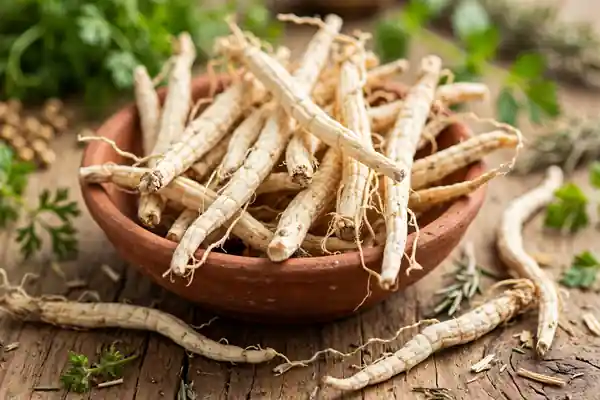
What is Shatavari?
Shatavari (Asparagus racemosus) is a traditional Ayurvedic herb belonging to the asparagus family. Its roots have been used in Ayurveda as a botanical ingredient associated particularly with women’s wellness, nourishment and overall vitality.
The herb is traditionally valued for its nourishing qualities and is commonly found in Ayurvedic formulations.
At a Glance
- Traditional Ayurvedic herb
- Botanical name: Asparagus racemosus
- Root is traditionally used
- Associated with women’s wellness
- Traditionally valued for nourishment and vitality
Shatavari at a Glance
Traditional Ayurvedic Use
In Ayurveda, Shatavari is traditionally regarded as a nourishing and supportive herb.
- Women’s wellness
- Nourishment and vitality
- Digestive wellness
- General rejuvenation
- Overall wellbeing
Shatavari Wellness Benefits
Shatavari is traditionally associated with several areas of general wellness.
Women’s Wellness
Traditionally valued as a nourishing botanical in Ayurvedic women’s wellness practices.
Digestive Wellness
Traditionally used in Ayurveda in preparations associated with comfortable digestion.
Nourishment & Vitality
Traditionally regarded as a nourishing herb associated with strength and general vitality.
Overall Wellness
Traditionally used as part of broader Ayurvedic wellness practices.
How is Shatavari Used?
The root is the traditionally used part of Shatavari. It may be found in several forms depending on the preparation.
- Shatavari powder
- Herbal formulations
- Capsules
- Traditional Ayurvedic preparations
- Herbal infusions
Shatavari & Modern Research
Modern research has investigated Asparagus racemosus for different biological activities and potential wellness applications.
However, laboratory, animal and preliminary human research should not automatically be interpreted as proof of a clinical benefit.
We distinguish between traditional Ayurvedic use, research findings and clinically established benefits.
Safety & Precautions
Shatavari is a botanical ingredient, but natural does not automatically mean suitable for everyone.
- Pregnant or breastfeeding individuals should seek professional guidance.
- People taking regular medicines should consult an appropriate healthcare professional.
- Those with an existing medical condition should seek professional advice before use.
- People with known plant allergies should check the ingredient carefully.
- Seek medical advice if an unusual reaction occurs.
Important: Shatavari should not be presented as a replacement for prescribed medical treatment.
Shatavari Origin & Botanical Profile
Shatavari is a climbing perennial plant traditionally associated with the Indian subcontinent and Ayurvedic herbal practice.
Its tuberous roots are the principal part traditionally used in Ayurvedic preparations.
Botanical Identity
Asparagus racemosus Willd.
Family: Asparagaceae
Frequently Asked Questions
What is Shatavari?
What is Shatavari traditionally used for?
What is the botanical name of Shatavari?
Which part of Shatavari is traditionally used?
How is Shatavari consumed?
Is Shatavari suitable for everyone?
Explore More VAIDAI Herbs
Discover the VAIDAI Herb Library
Explore traditional botanicals, their origins, traditional uses, research and responsible wellness information.
Explore All Herbs →