Shatavari
Asparagus racemosus Willd. • Sanskrit: ShatavariShatavari is a traditional Ayurvedic herb valued for its nourishing qualities and traditionally associated with women’s wellness, vitality and digestive wellness.
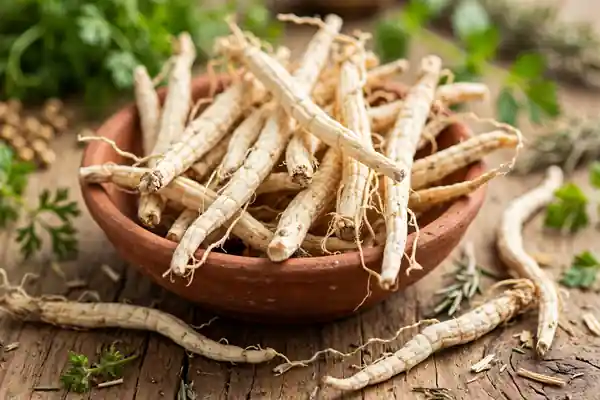
What is Shatavari?
Shatavari (Asparagus racemosus) is a traditional Ayurvedic botanical whose roots have long been used in Ayurvedic preparations.
Shatavari at a Glance
Shatavari belongs to the asparagus family and is particularly known in Ayurveda for its traditionally nourishing and supportive qualities. It is commonly associated with women’s wellness, vitality and digestive wellness.
The root is the principal part traditionally used in Ayurvedic formulations.
Traditional Uses & Wellness Associations
These descriptions reflect traditional Ayurvedic use and should not be interpreted as claims to diagnose, treat or cure disease.
Women’s Wellness
Traditionally valued in Ayurveda as a nourishing botanical associated with women’s wellness.
Nourishment & Vitality
Traditionally regarded as a nourishing herb and associated with strength, vitality and overall wellness.
Digestive Wellness
Shatavari is traditionally used in Ayurvedic preparations associated with digestive comfort and nourishment.
Traditional Rasayana
It has a long history of use within traditional Ayurvedic wellness and rejuvenative practices.
Root-Based Herb
The root is the principal botanical part traditionally used in Ayurvedic preparations.
Holistic Wellness
Traditionally incorporated into broader Ayurvedic approaches to nourishment and balanced wellness.
Shatavari in Ayurveda
Shatavari has an established place in traditional Ayurvedic herbal practice.
Traditional Identity
In Ayurveda, Shatavari is traditionally regarded as a nourishing botanical and is particularly associated with women’s wellness, reproductive nourishment and vitality.
Traditional Preparations
The root may be incorporated into traditional powders, decoctions, milk-based preparations and other Ayurvedic formulations.
Holistic Use
Traditional Ayurvedic use considers herbs within an individual's broader constitution, diet and lifestyle rather than as isolated solutions.
Traditional Context
Traditional descriptions are part of Ayurvedic knowledge and should be distinguished from modern clinical evidence.
What Does Modern Research Say?
Modern research has investigated Asparagus racemosus for its phytochemical composition, traditional applications and potential biological activities. Evidence varies by preparation, study design and outcome, so traditional use should not be treated as proof of clinical effectiveness.
Scientific literature has also examined compounds associated with Shatavari, including steroidal saponins such as Shatavarins.
Read Research on PubMed →Shatavari Dosage & Preparation
There is no single universal dosage suitable for everyone. Preparation and amount depend on the product, formulation and individual circumstances.
Traditional Forms
- Shatavari root powder
- Traditional Ayurvedic formulations
- Herbal infusions or preparations
- Formulated wellness products
Important Guidance
Follow the serving instructions of the specific product being used. For concentrated extracts or therapeutic Ayurvedic formulations, professional guidance is preferable.
Shatavari FAQ
What is Shatavari?
Shatavari is the common name for Asparagus racemosus, a traditional Ayurvedic herb whose root is widely used in Ayurvedic preparations.
What is Shatavari traditionally used for?
It is traditionally associated with women’s wellness, nourishment, vitality and digestive wellness.
Which part of Shatavari is traditionally used?
The root is the principal part traditionally used in Ayurvedic preparations.
Can everyone use Shatavari?
Not necessarily. Individual circumstances matter. People who are pregnant, breastfeeding, taking medicines or managing a health condition should seek professional advice before using concentrated preparations.
Is Shatavari scientifically proven to treat disease?
No. Traditional use and laboratory or clinical research should not be presented as proof that Shatavari treats or cures a disease. Research findings depend on the preparation, dose and study design.
Explore VAIDAI Formulations
Discover thoughtfully designed herbal wellness formulations inspired by traditional botanical knowledge and presented with a modern VAIDAI approach.
Explore Formulations →Disclaimer: The information on this page is provided for educational and general wellness purposes only. Traditional Ayurvedic uses described here are not intended to diagnose, treat, cure or prevent any disease. Modern research is provided for informational context and does not establish medical efficacy. Consult a qualified healthcare professional for personal medical advice.